Dual-Stream Mental Fitness: Why Hybrid Grid Puzzles Activate Both Spatial and Verbal Hemispheres
Discover how hybrid puzzles like Wordoku combine orthographic recognition with 2D spatial constraints to train verbal and spatial hemispheres simultaneously.
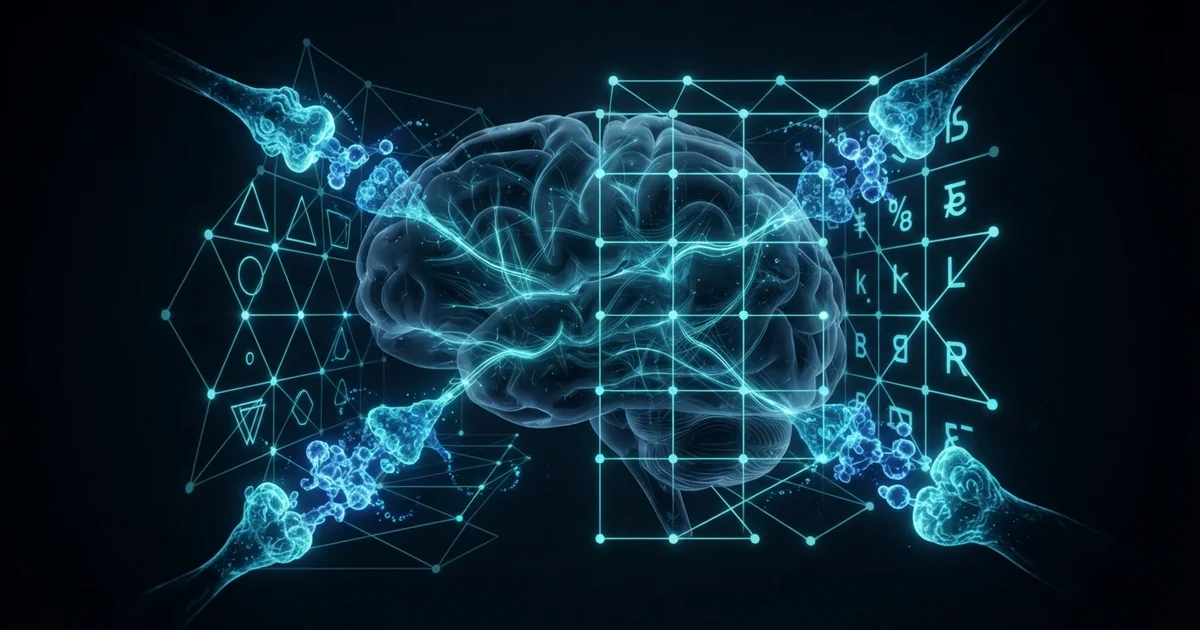
- •Traditional single-domain puzzles isolate either verbal lexicons or spatial coordinates, limiting neuroplastic crossover.
- •Cross-modal puzzles force high-bandwidth inter-hemispheric communication across the corpus callosum.
- •Wordoku transforms classic Latin square constraints into simultaneous orthographic decoding and 2D matrix satisfaction.
- •Integrated spatial reasoning and verbal intelligence training optimizes working memory capacity and builds cognitive reserve.
Dual-Stream Mental Fitness: Why Hybrid Grid Puzzles Activate Both Spatial and Verbal Hemispheres
For decades, cognitive training literature has separated mental exercises into two distinct categories: verbal fluency tasks (such as crosswords, anagrams, and cryptograms) and visuospatial logic grids (such as standard Sudoku, Nonograms, and Slitherlink). This separation reflects classical neuropsychological views of lateralization, which map linguistic decoding to the left hemisphere and spatial coordinate mapping to the right.
However, real-world executive functioning rarely operates in unimodal isolation. Modern neuroimaging reveals that high-performance decision-making demands rapid, cross-modal synthesis across both cerebral hemispheres. Engaging in spatial reasoning and verbal intelligence training within a unified paradigm solves the dilemma of one-dimensional mental workouts, stimulating higher-order neural plasticity and cognitive reserve.
Inter-hemispheric connectivity increase during dual-stream cross-modal puzzle tasks
Benchmark: vs. isolated unimodal logic or word tasks
The Modality Trap: The Limits of Single-Domain Puzzles
When you solve a traditional crossword, your brain relies heavily on semantic memory retrieval, lexical search, and orthographic processing centered within the left temporal lobe and inferior frontal gyrus (Broca's area). The spatial component is minimal; clues conform to a basic intersect, but the deductive burden is lexical.
Conversely, when solving a standard 9×9 numerical Sudoku, you are solving an exact Constraint Satisfaction Problem (CSP). The digits 1 through 9 function purely as distinct visual tokens. The brain recruits the Dorsolateral Prefrontal Cortex (DLPFC) for working memory and rule verification, alongside the Posterior Parietal Cortex (PPC) for 2D spatial coordinate navigation. Semantic networks remain largely dormant.
[ Unimodal Word Puzzle ] ──▶ Left Hemisphere Only (Lexical Retrieval / Broca's Area)
[ Unimodal Number Grid ] ──▶ Right-Dominant Frontoparietal (Spatial Coordinates / CSP)
[ Hybrid Cross-Modal Grid ] ──▶ Bilateral Co-Activation via Corpus Callosum
Relying exclusively on one format causes cognitive specialization at the expense of cross-network integration. Hybrid grid puzzles—most notably Wordoku—break this modality trap by demanding concurrent orthographic verification and geometric deduction.
Neurobiology of Cross-Modal Grid Processing
To solve a hybrid puzzle, the brain must harmonize distinct cortical loops. In Wordoku, a standard 9×9 grid must be populated with nine unique letters that spell a specific nine-letter target word across a designated row or diagonal, while satisfying standard Latin Square constraints: no repeating letter in any row, column, or 3×3 subgrid.
When a solver scans a 9-letter row containing the letters {C, O, G, N, I, T, I, V, E}:
- Orthographic Decoding and Interference Control: The Left Visual Word Form Area (VWFA) and Left Inferior Temporal Gyrus automatically parse the letters as phonetic and semantic units. The solver must actively inhibit standard reading reflexes (Stroop-like interference) to treat the letters as formal algebraic variables within the grid.
- Spatial Coordinate Mapping: The Right Posterior Parietal Cortex maps the coordinates (e.g., Row 4, Column 7) to determine bounding constraints across intersecting axes and local 3×3 blocks.
- Inter-Hemispheric Integration: Information passes continuously through the corpus callosum, linking the left hemisphere's symbolic-lexical recognition with the right hemisphere's non-verbal coordinate manipulation.
Brain Region Mapping Matrix
| Brain Region | Primary Cognitive Operation | Role in Hybrid Grid Puzzles | Cross-Modal Interaction |
|---|---|---|---|
| Dorsolateral Prefrontal Cortex (DLPFC) | Working memory manipulation, rule maintenance | Tracks candidate sets across rows, columns, and 3×3 subgrids | Coordinates symbolic logic with visual spatial maps |
| Visual Word Form Area (VWFA) | Orthographic letter recognition | Identifies specific glyphs and suppresses false word parsing | Relays orthographic tokens to parietal spatial registers |
| Posterior Parietal Cortex (PPC) | Visuospatial transformations & 2D coordinate indexing | Evaluates line-of-sight intersections and block vacancies | Grounds abstract letter tokens in geometric space |
| Anterior Cingulate Cortex (ACC) | Error detection and conflict monitoring | Resolves placement conflicts and Stroop-like lexical distractions | Regulates attention shifting between word clues and cell logic |
Dual-Coding Theory and Working Memory Dynamics
Why does cross-modal puzzle execution feel distinctly more demanding than standard numerical deduction? The answer lies in Allan Paivio’s Dual-Coding Theory and the structural limits of working memory (Miller’s Law: 7 ± 2 items).
In standard Sudoku, digits benefit from well-established numerical ordering heuristics (1 < 2 < 3 ... < 9). The human brain groups and compares numeric magnitudes with minimal cognitive friction.
In a letter-based hybrid puzzle, the ordering is non-sequential or governed by an unfamiliar anagrammatic target. The brain cannot fall back on automated magnitude comparisons. Instead, it must store both the visual-orthographic identity of the letter and its exact coordinate status in the phonological loop and visuospatial sketchpad simultaneously.
Cognitive load multiplier during non-sequential letter-token constraint solving
Benchmark: vs. automated sequential numerical indexing
This dual-stream loading prevents cognitive "autopilot," forcing the brain to recruit wider prefrontal networks to maintain candidate lists.
The Cross-Modal Execution Protocol
Solving a hybrid grid puzzle efficiently requires a structured cognitive protocol that balances lexical recognition with spatial candidate elimination.
Phase 1: Orthographic Initialization
Identify the target 9-letter set (e.g., B-R-A-I-N-W-O-R-K). Isolate the nine unique tokens. Suppress immediate semantic biases (such as hunting for short words like "RAW" or "BANK" across arbitrary lines) to avoid erroneous placements.
Phase 2: Geometric Line-of-Sight Filtering
Scan the 3×3 subgrids with the highest initial letter density. Project intersecting row and column vectors to isolate candidate cells for high-frequency letters.
Phase 3: Cross-Modal Candidate Pruning
Identify Naked Singles and Hidden Singles using cross-referencing:
- If a cell's intersecting row, column, and box already contain 8 of the 9 letters, identify the single remaining letter token through orthographic exclusion.
- Maintain mental candidate sets without relying on numerical sequence shortcuts.
Phase 4: Target Word Synthesis
As constraints resolve, monitor the designated word-line (often the central row or main diagonal). The emergence of the target anagram provides a secondary semantic verification channel, confirming that the spatial deductions are correct.
Long-Term Benefits for Cognitive Reserve
Engaging regularly in spatial reasoning and verbal intelligence training builds robust cognitive reserve. Longitudinal studies demonstrate that multi-domain mental activity fosters higher synaptic density and dendritic branching than single-domain tasks, helping protect against age-related cognitive decline.
Rate of executive function decline in older adults practicing multi-modal logic puzzles
Benchmark: compared to sedentary control cohorts over a 5-year tracking period
By challenging both the verbal left hemisphere and the spatial right hemisphere within a single exercise, hybrid puzzles provide balanced, time-efficient, and neurobiologically complete mental conditioning.
Conclusion: Elevate Your Training
One-dimensional mental exercises train isolated neural pathways. To cultivate flexible working memory, robust executive control, and sharp analytical reasoning, your brain requires integrated, cross-modal problem-solving. Hybrid grid puzzles like Wordoku merge orthographic processing with rigorous geometric deduction, creating a balanced cognitive workout.
Visit our interactive puzzle library today to put these principles into practice, activate both hemispheres, and experience the power of dual-stream mental fitness.
Frequently Asked Questions
Published by the Puzzle Paradise Research & Editorial Team. Every puzzle technique and guide is empirically verified, step-by-step illustrated, and crafted to build real cognitive problem-solving ability.
Related Strategy Guides & Articles
The Geometry of Deduction: Solving Multivariable Logic Grids with Matrix Algebra
Master multivariable logic grids by eliminating cognitive overload with linear algebra, cross-elimination heuristics, and structured binary matrices.
Unlock Your Brain's Full Potential: The Cognitive Science Behind Daily Puzzle Play
Explore peer-reviewed cognitive science behind daily puzzle play. Discover how crosswords, Sudoku, and logic games boost memory, executive function, and neuroplasticity.
From Euler's Latin Squares to Tokyo's Nikoli Revolution: The 240-Year Evolution and Neuro-Logic of Sudoku
Uncover the true history of sudoku euler latin squares, tracing its path from 18th-century Swiss mathematics to modern prefrontal neuroscience.