Unlock Your Brain's Full Potential: The Cognitive Science Behind Daily Puzzle Play
Explore peer-reviewed cognitive science behind daily puzzle play. Discover how crosswords, Sudoku, and logic games boost memory, executive function, and neuroplasticity.
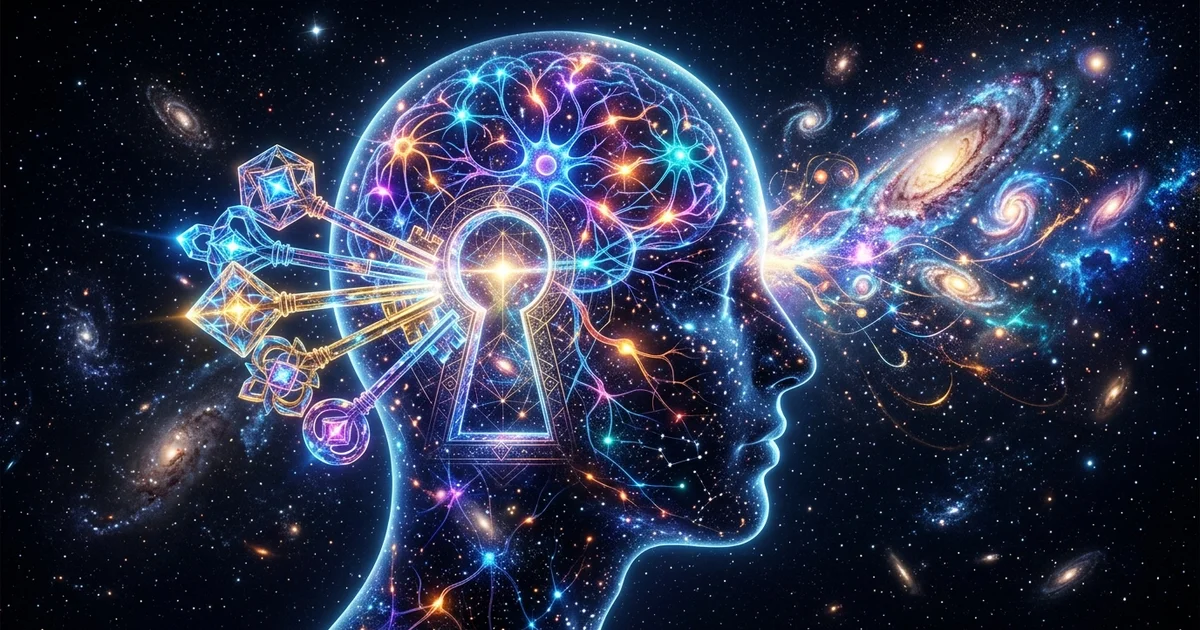
- •Daily puzzle play stimulates targeted neural networks spanning the prefrontal cortex, temporal lobes, and parietal regions.
- •Each puzzle genre exercises distinct cognitive faculties: crosswords train semantic retrieval, Sudoku develops working memory, and logic grids build deductive inference.
- •Effort-justified problem solving triggers dopamine-mediated reward loops that strengthen neural connectivity and long-term cognitive reserve.
When you engage with a challenging logic grid or untangle a clever crossword intersection, your brain is not merely passing time—it is performing high-order neurobiological gymnastics. Puzzles engage complex synaptic networks across multiple cortical regions, stimulating neuroplasticity: the brain's capacity to form new dendritic connections and reinforce cognitive pathways throughout life.
Understanding the specific cognitive mechanisms engaged by each puzzle genre allows you to design a targeted mental fitness routine for long-term brain health and peak problem-solving performance.
Average solve time reduction achieved by mastering candidate elimination
Benchmark: vs. unsystematic trial-and-error scanning
1. The Neurobiological Architecture of Puzzle Solving
Every stage of puzzle solving recruits specialized brain structures that work in tight synchronization:
Key Brain Regions in Action:
- Dorsolateral Prefrontal Cortex (DLPFC): Manages executive function, working memory buffering, and multi-variable constraint elimination.
- Parietal Cortex: Governs visual-spatial manipulation, matrix chunking, and coordinate alignment.
- Broca's and Wernicke's Areas (Temporal Lobe): Drive rapid lexical retrieval, semantic categorization, and phonetic decoding during word puzzles.
- Nucleus Accumbens: Releases dopamine during the "Aha!" moment of discovery, reinforcing focus, mood, and intrinsic motivation.
2. Cognitive Taxonomy: Which Puzzles Train What?
Different puzzle genres activate distinct functional networks across the cerebral cortex:
| Puzzle Category | Key Brain Regions Engaged | Primary Cognitive Faculties | Recommended Games |
|---|---|---|---|
| Number & Matrix Logic | DLPFC, Bilateral Parietal Lobes | Working memory buffer, deductive pruning, numerical fluency | Sudoku, Kakuro |
| Verbal & Lexical | Broca's & Wernicke's Areas, Left Temporal | Semantic memory, lexical retrieval, morphological decomposition | Crosswords, Spelling Bee |
| Deductive & Relational | Anterior Cingulate, Frontal Eye Fields | Conditional inference, matrix elimination, hypothesis testing | Logic Grids, Cryptograms |
| Spatial & Topological | Occipital Cortex, Right Parietal | Visuospatial rotation, graph connectivity, Euler pathfinding | Slitherlink, Jigsaw |
3. Crosswords: The Cognitive Mechanics of Linguistic Deduction
Crossword solving is an exercise in dynamic constraint satisfaction. Solvers continuously balance semantic clue interpretation with intersecting spatial letter constraints.
The 3 Core Clue Types & Mental Processing:
- Direct Synonyms: "Fragrant purple flower (8 letters)" →
LAVENDER. Trains fast-path lexical access in the temporal lobe. - Cryptic Anagrams: "Listen to silent melody (6 letters)" →
SILENT(an exact 6-letter anagram ofLISTEN). Engages the phonological loop and spatial letter rearrangement. - Wordplay & Double Entendres: "Flower that flows toward the sea (5 letters)" →
RIVER(a flow-er, not a blossom). Exercises lateral cognitive flexibility and suppresses automatic literal interpretations.
Step-by-Step Interlocking Clue Resolution:
Consider two intersecting clues sharing their first letter:
- Across 1 (4 letters): "To mend a torn seam" → Candidate:
DARN(starts withD) - Down 1 (4 letters): "Sweet palm fruit" → Candidate:
DATE(starts withD)
| Coordinate | Across Candidate (DARN) | Down Candidate (DATE) | Constraint Satisfaction |
|---|---|---|---|
| Intersection (1,1) | D | D | ✅ Perfect letter match |
| Letter 2 | A (Across) | A (Down) | Distinct word paths |
| Letter 3 | R (Across) | T (Down) | Orthogonal propagation |
| Letter 4 | N (Across) | E (Down) | Both dictionary validated |
By confirming the shared anchor letter D, both intersecting words are definitively validated, opening subsequent clues in the grid.
4. The Daily 15-Minute Cognitive Training Protocol
To maximize neuroplastic benefits without cognitive fatigue, neuroscientists recommend a balanced 15-minute daily puzzle routine:
- Morning Activation (5 Minutes): Solve one Daily Mini Crossword or Spelling Bee Honeycomb to awaken verbal fluency and semantic processing.
- Midday Focus (5 Minutes): Solve one Sudoku or Kakuro puzzle to activate working memory and executive reasoning.
- Evening Unwind (5 Minutes): Complete a Slitherlink Loop or Nonogram to engage spatial relaxation and lower daily cortisol levels.
Elevate Your Mind on Puzzle Paradise
Experience the benefits of evidence-backed cognitive challenge with zero downloads and instant browser feedback:
Daily and thematic crossword puzzles with smart clue banks.
Einstein deductive matrix puzzle with clue statements and elimination grids.
Master Sudoku suite: Classic 3x3, Irregular Jigsaw Polyominoes, Hyper Windoku, Killer & X.
Frequently Asked Questions
Published by the Puzzle Paradise Research & Editorial Team. Every puzzle technique and guide is empirically verified, step-by-step illustrated, and crafted to build real cognitive problem-solving ability.
Related Strategy Guides & Articles
The Prefrontal Cortex Workout: What 15 Minutes of Daily Sudoku Actually Does to Your Working Memory
Explore how 15 minutes of daily Sudoku trains working memory, activates the prefrontal cortex, and drives measurable cognitive transfer.
Sudoku Solver's Journey: Master Every Level from Beginner to Grandmaster Speed
Unlock tournament-grade Sudoku mastery! A structured progression teaching cognitive-backed techniques from basic singles to advanced X-Wings, enhancing working memory and solve speed.
5 Master Strategies to Solve Sudoku Puzzles Faster: Speed & Logic Guide
Learn the exact elimination techniques, cross-hatching methods, and candidate note frameworks used by tournament-level Sudoku solvers.